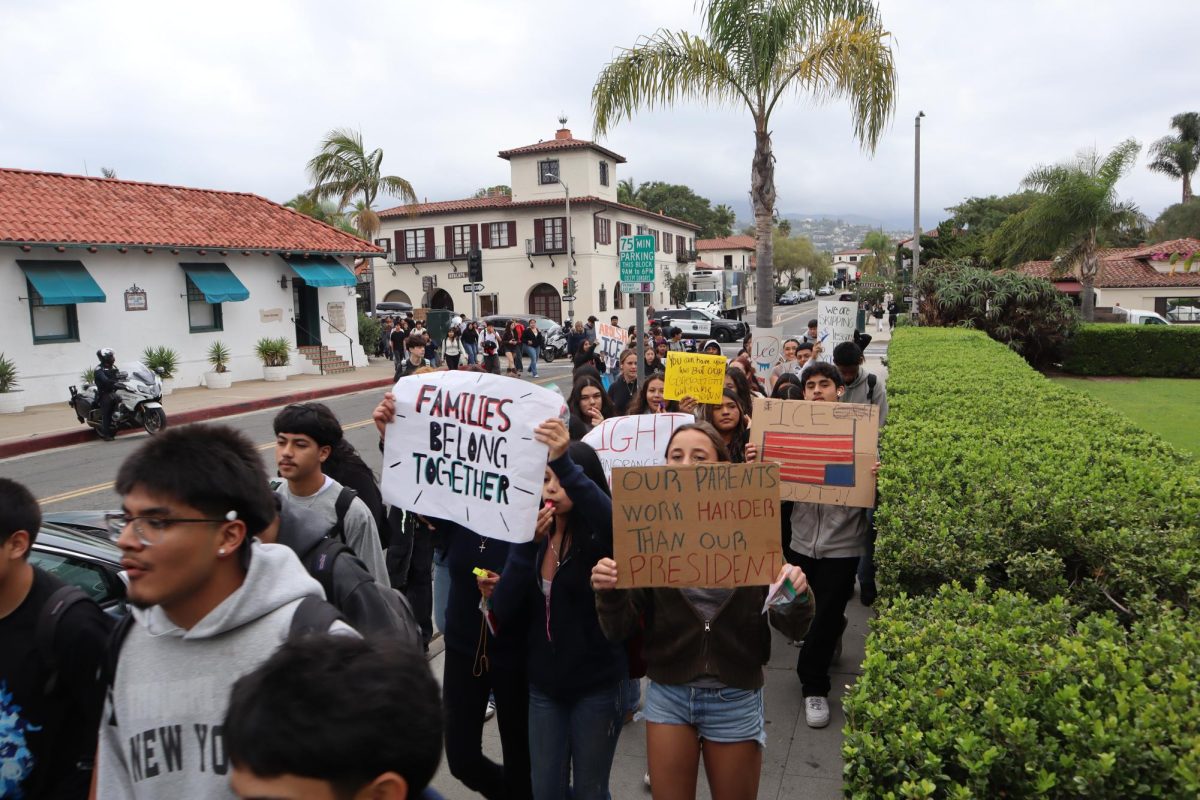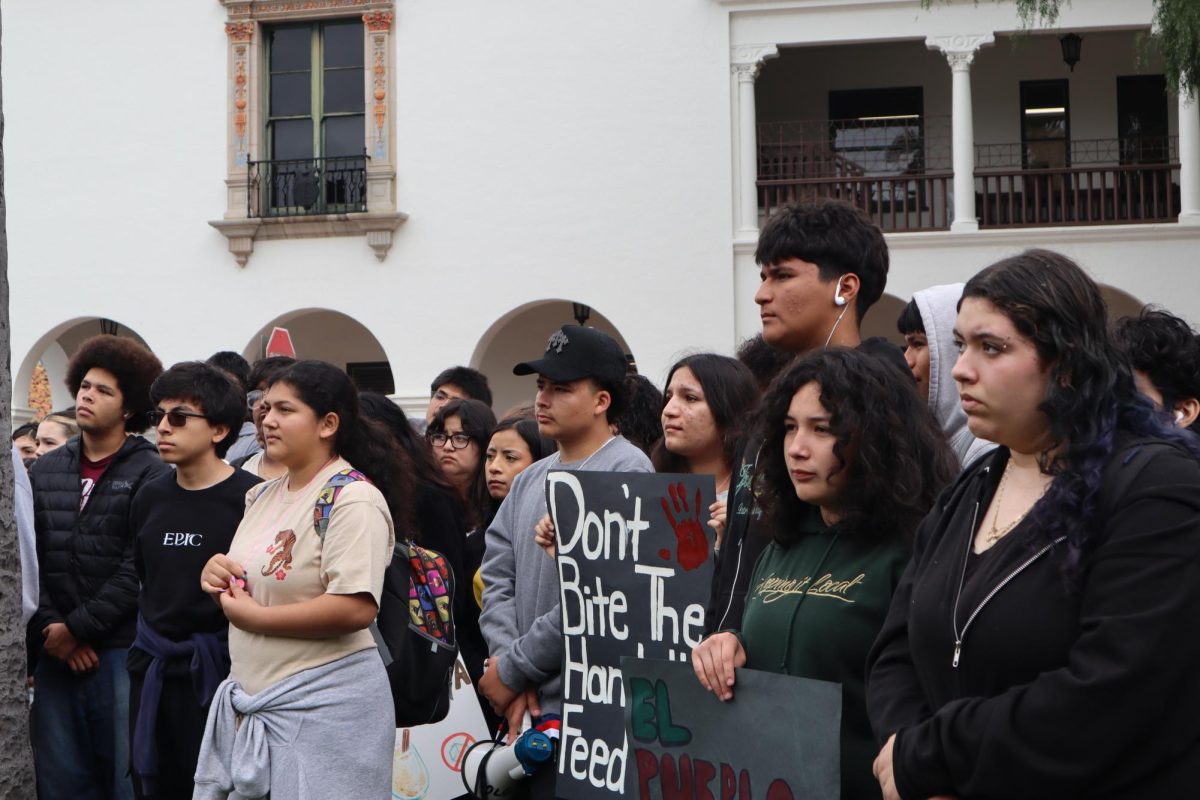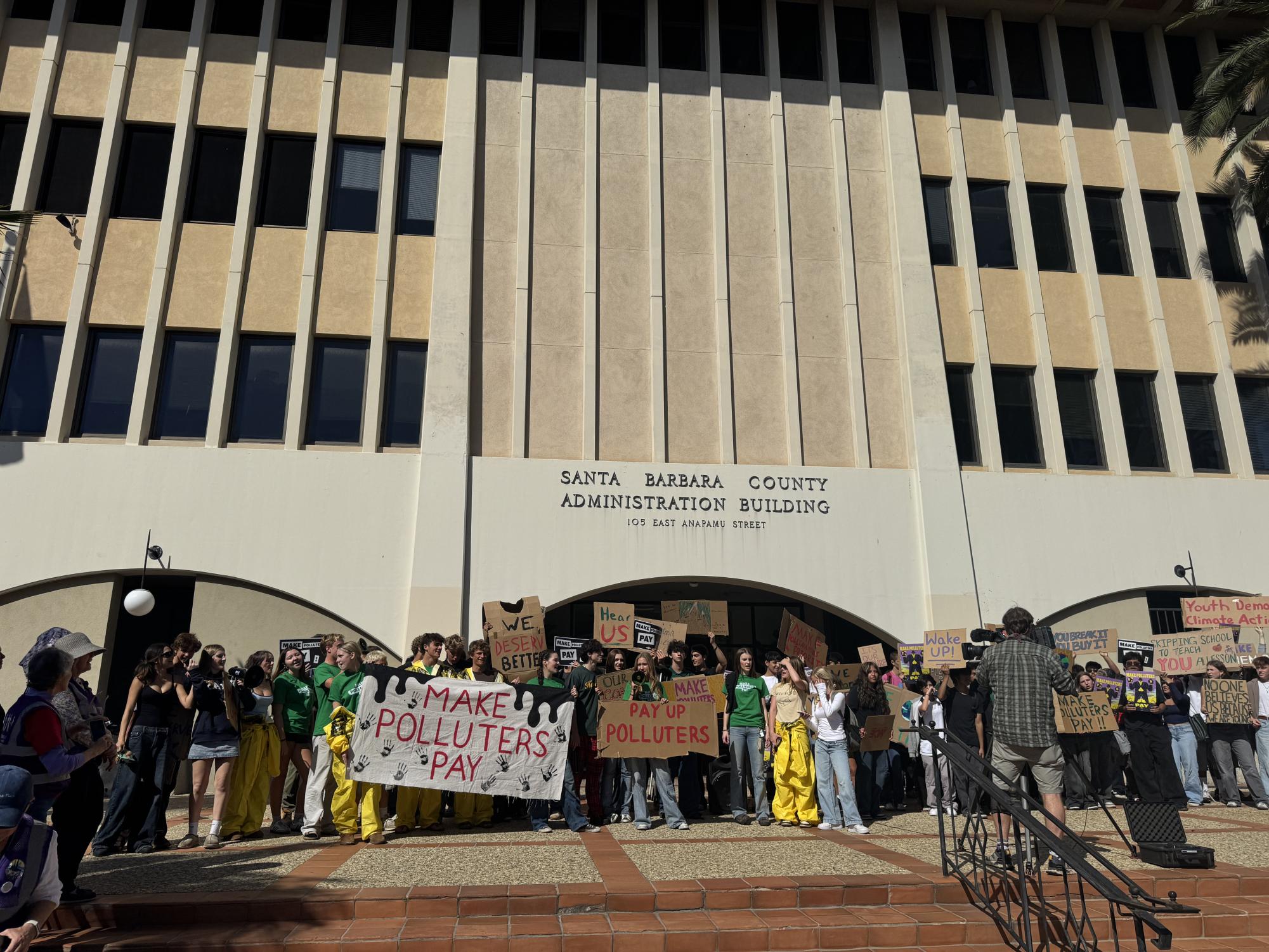
On Friday, Oct 24, Santa Barbara High School students took to the streets in a Make Polluters Pay Walkout, joining over 50 schools statewide. The action was organized by groups including the Los Angeles Sunrise Movement and San Diego 350, and supported the Make Polluters Pay Climate Superfund Act. Let’s dive into that legislation.
The Make Polluters Pay Climate Superfund Act, or Senate Bill 684, was introduced in January, and will proportionally tax major fossil-fuel emitting companies proportionately for their share in climate damages. This money will go into a “superfund,” where it will be used on local sustainable projects and disaster response.
The author, Democratic Senator Caroline Menjivar of San Fernando Valley, said in a press release in late February “The Polluters Pay Climate Superfund Act is a commonsense way to tap into a small fraction of polluters’ profits, and collect their share of the financial burden.”
Taken from the current draft of the bill amended in the Senate on Mar. 26, “Qualifying expenditures shall include expenditures for projects and programs that mitigate or adapt to climate change and its impact to the state, local and tribal governments, and California residents.” The bill goes on, broadly listing ways the money can be spent. Most notably, these include funding for community disaster preparedness, response, and recovery, with a push in the legislature coming after the Los Angeles fires. The funds would also go towards initiatives including regenerative agricultural practices, transitioning to clean energy sources, public transit, and financial support for workers whose livelihoods are impacted by climate change.
In Santa Barbara, some examples of what that could look like include more solar energy production, electric buses, programs to support farmers with sustainable farming practices, and more. One key argument that supporters, including Assemblymember Dawn Addis, make revolves around the increasing costs of climate change. “This year’s fires in Los Angeles serve as a stark reminder that collective inaction has catastrophic consequences for all Californians,” said Addis in a press release. The Los Angeles fires cost an estimated 260 billion dollars, and the Thomas Fire of 2017, and following Montecito Mudslide in 2018 cost an estimated 3 billion dollars. Taxpayer money is being used to support the rebuilding and cleanup efforts, and supporters argue that the responsibility should fall on the corporations creating the conditions where a natural disaster is more likely to occur. On their website, the California Environmental Voters stress the urgent need “to make polluters pay for the escalating costs of climate change in California.”
Critics, however, argue that the costs could be transferred onto the consumer and result in higher gas prices. President Trump’s executive counter-action signed on April 8 directed the US Attorney General, Pam Bondi, and other relevant agencies to identify laws and policies that “burden” energy development(especially relating to climate change initiatives), and take action to stop the enforcement of those laws. The executive order said “Americans must be permitted to heat their homes, fuel their cars, and have peace of mind — free from policies that make energy more expensive and inevitably degrade quality of life. These State laws and policies are fundamentally irreconcilable with my Administration’s objective to unleash American energy. They should not stand.”
The bill is in progress, and pending the first Committee review, after which it will continue to the first and second chamber reviews, along with a committee review. If it passes in both the State Senate and Assembly, it will await the signature of Governor Newsom. The bill is expected to be voted on in January and would likely go into effect in 2027.